TPRM vs Vendor Risk Management: What Is the Difference?
23 October 2026 · 4 min read
On this page
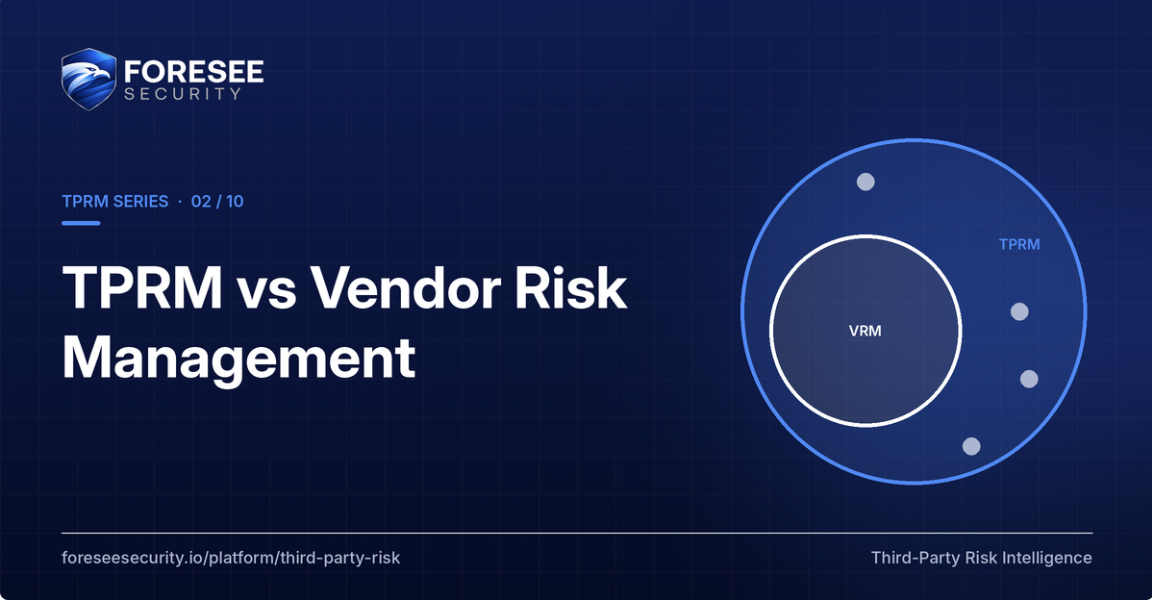
Vendor risk management (VRM) covers the companies you buy from. Third-party risk management (TPRM) covers every outside party your business depends on or acts through, including ones you never pay. VRM is a subset of TPRM. The difference sounds academic until a collections agent, a co-lending partner or your vendor's cloud host causes an incident that your VRM program was never scoped to see.
The short version
| Vendor risk management | Third-party risk management | |
|---|---|---|
| Who's in scope | Suppliers with a purchase order or contract | Vendors plus partners, agents, affiliates, distributors, fourth parties |
| Typical owner | Procurement, sometimes IT | Risk, security or a central TPRM function, with procurement as a partner |
| Trigger | A purchase | Any relationship that touches data, systems, customers or regulated activity |
| Main question | "Is this supplier safe to buy from?" | "Can this relationship hurt us, our customers or our compliance?" |
| Regulatory fit | Partial | What RBI, SEBI, DORA and US regulators actually describe |
Where VRM stops short
VRM grew out of procurement. It follows the money: a vendor gets reviewed when someone raises a purchase order. That leaves three blind spots.
1. Relationships without a purchase order. Revenue-sharing partners, referral partners, DSAs, co-lending arrangements and group companies often have no conventional vendor contract. Many of them still handle customer data or speak to customers on your behalf.
2. Fourth parties. Your KYC provider uses a cloud host and an OCR service. Your payment processor uses a fraud-scoring vendor. Those companies hold your customers' data but never appear in your vendor master.
3. Risks that aren't about the purchase. VRM focuses on whether the supplier delivers and is financially sound. TPRM adds cyber exposure, data privacy, conduct and concentration risk.
[ADD] One example from Nikunj's NBFC experience of a non-vendor relationship that carried real risk.
Why the distinction matters for regulated firms
Regulators don't use the narrow definition. The RBI Master Direction on Outsourcing of IT Services applies to arrangements whether the service provider is in India or abroad, and includes outsourcing within your own business group. SEBI's CSCRF requires regulated entities to assess and manage the cyber readiness of their third-party service providers. The EU's DORA uses "ICT third-party service providers" and expects a register of all such arrangements.
If your program only covers suppliers procurement knows about, an auditor will find the gap.
Do you need two programs?
No. You need one TPRM program with VRM inside it. Procurement keeps running supplier onboarding, pricing and performance. The TPRM function sets the risk rules that apply to every third party, paid or not:
- One inventory of all third parties, not just suppliers
- One tiering model based on access and criticality
- One assessment and monitoring standard per tier
- One place to report third-party risk to the board
This is how Foresee's Third-Party Risk Intelligence is set up. You import every third party, tier each one by what it can reach, and monitor them all continuously. Whether procurement pays them doesn't change the risk.
For banks, lenders and capital markets firms, that scope typically means lending partners, fintechs and IT vendors, all ranked by business impact. See how this works for banks, lenders and capital markets, including an on-prem option for data that can't leave your environment.
How to widen a VRM program into TPRM
- Expand the inventory. Pull lists from finance, but also from IT (who has VPN or API access?), compliance (who handles customer data?) and the business (which partners speak to customers?).
- Ask your critical vendors for their critical vendors. Start with the top 10. Note which fourth parties hold your data.
- Retier everything by access. A partner you don't pay but who processes identity documents is high tier.
- Add outside-in monitoring. It works for parties that will never fill a questionnaire, because it needs nothing from them.
- Report it as one number. The board should see total third-party risk, not supplier risk.
For the full build, see how to build a TPRM framework. For the basics, start with what is TPRM.
FAQs
Is vendor risk management the same as supplier risk management? Mostly, yes. Both focus on companies you buy from. Supplier risk management is common in manufacturing and often adds supply continuity. Vendor risk management is the more common term in IT and financial services.
Are fourth parties part of TPRM? Yes. Regulators increasingly expect you to know which subcontractors your critical vendors use, especially where they hold your data. Most firms cover this through contract clauses and by asking critical vendors to disclose key subcontractors.
Who should own TPRM if procurement owns VRM today? Usually risk or information security, with procurement as a partner rather than the owner. See TPRM roles and responsibilities.
Does a small company need full TPRM or is VRM enough? If you are regulated, or you share customer data with partners, you need TPRM scope. You can keep the process light. Scope and depth are separate decisions.
Find out which third parties are most exposed today. Get a free vendor snapshot for five of your vendors, or see Foresee Third-Party Risk.
Sources: RBI Master Direction on Outsourcing of IT Services · SEBI CSCRF third-party provisions, Bar & Bench
More from the blog
See all articles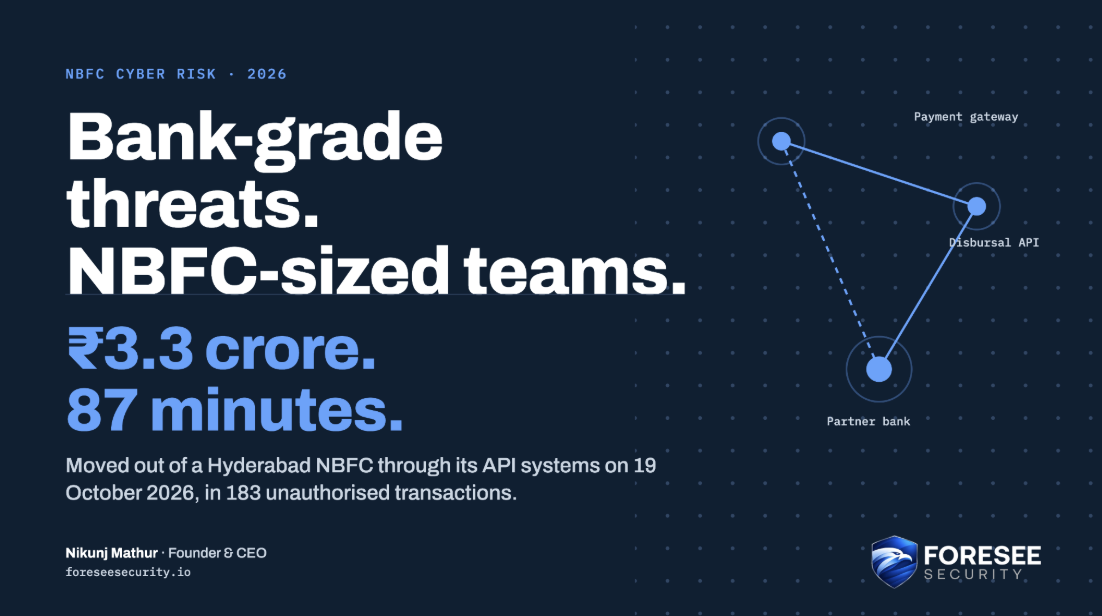
8 min read
Bank-Grade Threats, NBFC-Sized Teams
Why mid-sized NBFCs need a different cybersecurity strategy By Nikunj Mathur, Founder & CEO, Foresee Security On the morning of 19 October 2026, attackers got into a…

9 min read
The month in breaches: what October 2026's cyber attacks tell us
October's incidents landed in four places at once: internet-facing assets nobody had inventoried, vendors and open-source packages trusted by default, compliance…
4 min read
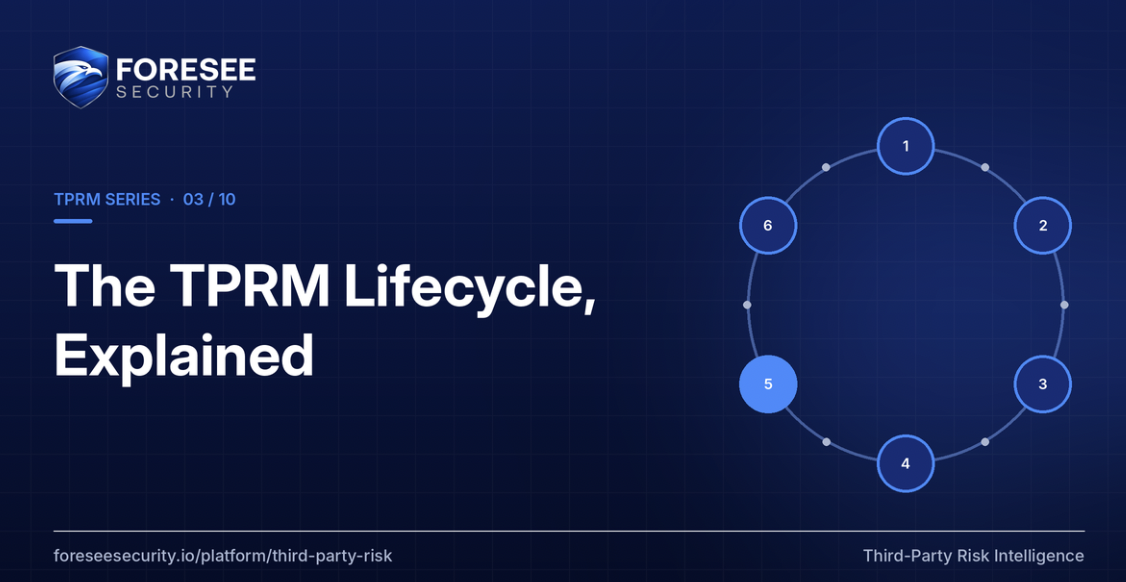
The Third-Party Risk Management Lifecycle Explained
The TPRM lifecycle has six stages: identify, onboard, contract, assess, monitor and offboard. Most programs do the first four reasonably well. They lose control in stage…

See what Foresee finds on your own domain.
A 30-minute call. Share a domain and we will walk you through what we find.