DPDP, One Year In: Could You Spot a Breach Within 72 Hours?
13 November 2026 · 8 min read
On this page
- What changes on 13 November 2026, and what doesn't
- Who DPDP applies to
- What you must do from 13 May 2027
- The security safeguards, in plain terms
- The 72-hour problem
- What a breach notice has to say
- DPDP isn't the only clock
- The penalties
- What to put in place before May 2027
- A quarter-by-quarter plan to May 2027
- FAQs
The DPDP Rules turn one year old this week. Most of the hard obligations, including security safeguards and breach reporting, apply from 13 May 2027. That sounds like time. It isn't. The 72-hour clock starts when you become aware of a breach, and most companies find out weeks late. This guide covers what changed today, who the law applies to, what you must do from May 2027, what a breach notice has to contain, the penalties, and a quarter-by-quarter plan to get ready.
What changes on 13 November 2026, and what doesn't
The Rules were notified on 13 November 2025 and switch on in three stages (Bar & Bench):
| Date | What applies | |
|---|---|---|
| 13 Nov 2025 | The Data Protection Board is set up | |
| 13 Nov 2026 | Rule 4: registration and obligations of Consent Managers | |
| 13 May 2027 | Everything else: notice and consent, data principal rights, security safeguards, breach notification, children's data, cross-border transfers |
So today's milestone matters mainly to Consent Managers, the registered platforms that let people give, manage and withdraw consent across services. For everyone else, it is the halfway mark to May 2027.
How exposed is your data today? Share a domain and we'll show you what is already visible from the outside. Book a demo.
Who DPDP applies to
DPDP covers any organisation that processes digital personal data in India, whatever its size. It also reaches companies outside India that process personal data to offer goods or services to people in India. Four roles matter:
| Role | Who it is | What it means for you |
|---|---|---|
| Data Principal | The person the data is about: your customer, employee or user | They hold the rights: access, correction, erasure, grievance and nomination |
| Data Fiduciary | The organisation that decides why and how data is processed | You carry the obligations and the penalties |
| Data Processor | A vendor processing data on your behalf: cloud, payroll, CRM, call centre | You stay responsible for what they do with your data |
| Significant Data Fiduciary | A fiduciary the government designates for volume or sensitivity of data | Extra duties: a Data Protection Officer based in India, an independent auditor, and annual impact assessments and audits |
The third row is the one most companies underestimate. If your vendor leaks your customers' data, it is your breach to report.
What you must do from 13 May 2027
| Obligation | What it means in practice |
|---|---|
| Notice and consent | Tell people in plain language what you collect and why, before you collect it. Consent must be free, specific and as easy to withdraw as to give |
| Purpose and erasure | Use data only for the purpose given. Erase it when that purpose is served or consent is withdrawn. Some classes of business must warn people 48 hours before erasure |
| Data principal rights | Handle requests to access, correct and erase data, and answer grievances within 90 days at most |
| Security safeguards | Put reasonable technical and organisational measures in place (next section) |
| Breach notification | Tell the Board and every affected person, with a detailed report to the Board within 72 hours |
| Children's data | Get verifiable parental consent. No tracking, behavioural monitoring or targeted advertising aimed at children |
| Processor contracts | Contracts must require your vendors to apply the same safeguards |
The security safeguards, in plain terms
Rule 6 doesn't name products. It asks for reasonable safeguards and lists what they include (DSCI, Lawrbit):
- Protect the data itself: encryption, masking, obfuscation or tokenisation.
- Control access to the systems that hold personal data.
- Keep logs and watch them, so unauthorised access is detected and investigated.
- Keep logs and related data for at least one year, so a breach can be traced after the fact.
- Plan for continuity, including backups, so data survives an incident.
- Write safeguards into vendor contracts.
"Reasonable" is decided after something goes wrong. The question the Board will ask is simple: what did you know, and what did you do about it? Evidence answers that question. Good intentions don't.
The 72-hour problem
Once the Rules apply in full, a data fiduciary must tell the Board and each affected person about a personal data breach, then file a detailed report with the Board within 72 hours of becoming aware of it. There is no materiality threshold. Every personal data breach must be notified, whatever its size (Sansa Legal).
The clock is the easy part. The hard part is knowing. Breaches rarely announce themselves. They show up as:
- employee or customer logins posted on a dark web forum
- a database dump on a paste site
- a storage bucket that was public for months
- a phishing domain that has been collecting credentials since last week
- a vendor's breach that included your customers' records
Ask a mid-sized company how it would find out about a breach, and the honest answer is usually: someone tells us. A customer forwards a phishing email that used our name. A bank flags unusual transactions. A researcher emails about a database they found open. By then the data has been out for days or weeks, and the 72 hours start from a position you didn't choose.
What a breach notice has to say
To each affected person, in plain language:
- what happened: the nature and extent of the breach, and when and where it occurred
- what it is likely to mean for them
- what you are doing about it
- what they can do to protect themselves
- who to contact for questions
To the Data Protection Board: an initial intimation as soon as you know, then a detailed report within 72 hours. Expect it to cover the updated facts, the cause, what you did to contain it, what you know about who was responsible, the steps to prevent a repeat, and confirmation that affected people were told.
You can only write either notice if you can answer three questions fast: which systems were involved, whose data was in them, and since when. Each of those depends on an inventory you build before the breach, not during it.
DPDP isn't the only clock
CERT-In's April 2022 directions already require specified cyber incidents to be reported within 6 hours of noticing them. RBI- and SEBI-regulated entities have their own reporting rules on top. DPDP adds a third audience, the Data Protection Board, and a fourth, every affected person. One incident can now mean four notices on four timelines. Write down now who sends which one.
The penalties
The Act's Schedule sets these maximums per breach (DPDP Act, Schedule):
| Breach of | Maximum penalty |
|---|---|
| Reasonable security safeguards to prevent a personal data breach | ₹250 crore |
| Notifying the Board or affected people of a breach | ₹200 crore |
| Additional obligations for children's data | ₹200 crore |
| Additional obligations of a Significant Data Fiduciary | ₹150 crore |
| Any other provision of the Act or Rules | ₹50 crore |
| Duties of a Data Principal | ₹10,000 |
Note the top two rows. A single incident can trigger both: one penalty for weak safeguards, another for a late or missing notice.
What to put in place before May 2027
- An inventory of everything internet-facing. You can't protect, or report on, systems you don't know you have.
- Continuous monitoring for leaked data. Dark web markets, paste sites, public code repositories and exposed cloud storage, checked every day, not every quarter.
- Phishing and lookalike domain alerts. Most personal data breaches start with a stolen login.
- A breach decision path. Who decides it is a breach, who drafts each notice, and who signs it, written down before you need it.
- Evidence of safeguards. A dated record of what was found and what was fixed. That record is what shows a regulator your safeguards were reasonable.
The step most companies skip is number four, the decision path. It feels like paperwork until the night you need it. Then nobody knows who can call it a breach, who drafts the notice, or who signs it, and the first day of the 72 hours goes on finding out who decides.
A quarter-by-quarter plan to May 2027
| When | Focus | Done when |
|---|---|---|
| Nov–Dec 2026 | See what you have | A data map of what personal data you hold and where; an inventory of internet-facing systems; one named owner for DPDP |
| Jan–Mar 2027 | Fix the foundations | Notices and consent flows rewritten; a process for access, correction and erasure requests; vendor contracts updated; logs kept for a year |
| Apr–13 May 2027 | Prove it works | A breach drill run end to end, including all four notices; continuous external monitoring live; an evidence pack ready for the Board |
Start the monitoring in the first quarter, not the last. Its record of what was found and fixed is only useful as evidence if it goes back far enough.
This is where Foresee's External Exposure module comes in. It watches your domains, applications, email, public exposure and the dark web from the outside, with nothing to install, and keeps a dated record of every finding. Foresee AI then ranks what to fix first, so the team reaches May 2027 prepared, not surprised. We wrote about why passing an audit isn't the same as being safe in Compliance Is the Baseline. Risk Is the Real Question.
FAQs
What came into force on 13 November 2026? Rule 4, covering the registration and obligations of Consent Managers. Most other obligations, including security and breach reporting, apply from 13 May 2027.
Does DPDP apply to small and mid-sized companies? Yes. It applies to any organisation that processes digital personal data in India, whatever its size.
How long do companies have to report a personal data breach? Notice to the Board and affected people without delay, and a detailed report to the Board within 72 hours of becoming aware of the breach.
Do we have to notify customers about every breach? Yes. DPDP has no materiality threshold, so every personal data breach must be notified to affected people.
What is the maximum penalty under DPDP? Up to ₹250 crore for failing to take reasonable security safeguards, and up to ₹200 crore for failing to notify a breach.
Are we responsible for a breach at our vendor? Yes. As the data fiduciary, you remain responsible for personal data your processors handle on your behalf.
Does the CERT-In 6-hour rule still apply? Yes. DPDP adds to existing reporting rules. It doesn't replace them.
See what an attacker could already take from you. Book a demo or explore External Exposure.
Sources: DPDP Rules 2025, Bar & Bench · DPDP Act, the Schedule · Insight Brief on DPDP Rules, DSCI · DPDP Rules 2025, Lawrbit · DPDP compliance before May 2027, Sansa Legal
About the author: Nikunj Mathur is Founder and CEO of Foresee Security and a practising CISO in financial services. He writes about how mid-sized companies make cyber risk decisions with small teams.
More from the blog
See all articles
4 min read
12 TPRM Metrics and KPIs to Track Program Performance
The best TPRM metrics measure exposure, not activity. "Assessments completed this quarter" tells the board your team was busy. "Critical vendors with a high-severity…
4 min read
How to Build a Third-Party Risk Management Framework
A TPRM framework is the set of rules that decides, for every third party, how much scrutiny it gets, who signs off and what happens when something goes wrong. The most…
8 min read
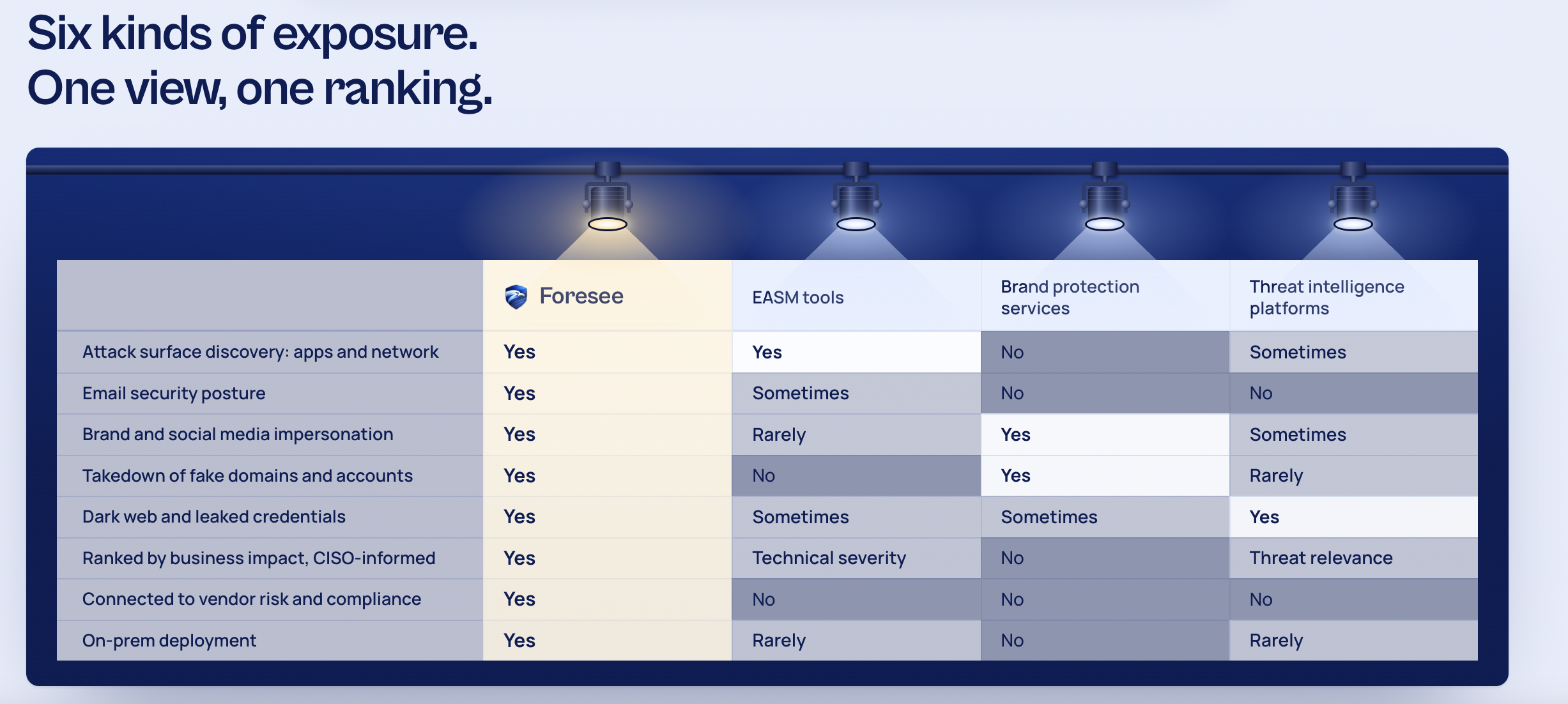
Your Attack Surface Never Sleeps. Why Continuous External Exposure Monitoring Is the Need of the Hour
From forgotten subdomains and exposed services to impersonating domains and leaked credentials, organisations need to know what the internet can see before attackers…

See what Foresee finds on your own domain.
A 30-minute call. Share a domain and we will walk you through what we find.